Jane Austen Cover To Cover

Never judge a book by its cover. Ironically, Jane Austen initially referred to Pride and Prejudice, by the title First Impressions. Fans of Jane Austen know better than to judge a book by its cover, and must strive to go beyond first impressions and get to know her characters on a deeper level. Cue the debonair Mr. Darcy.

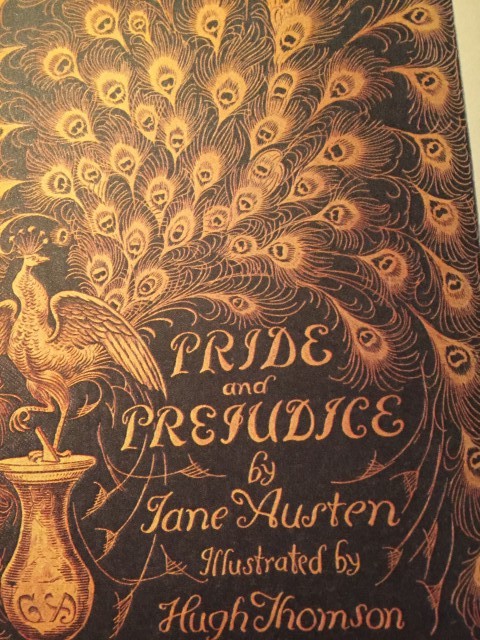
But, in the world of graphical design and book publishing, first impressions are everything. Most of us, unfortunately, are also swayed by the book’s cover. Jane Austen Cover to Cover, is not just a celebration of the author’s celebrated stories. For lovers of design and Jane Austen’s six books, this is truly a wonderful collection that incorporates two centuries of design, from elegant Victorian hardcovers and the famed 1894 “Peacock” edition to 1950s pulp, movie tie-in editions, graphic novels, foreign-language translations, and more.

As you follow along on a journey across the years, you will also be part of an adventure through the various forms of graphical evolution, from handset typography to digital technology. The artwork is beautiful and the insightful commentary makes this wonderful collection a must for Janeites, design geeks, and book lovers of every stripe.

What is interesting (and not at all surprising) is that despite the various incarnations of the cover, the underlying text remains constant. Score one for the writers.

“No matter how beautiful, tacky, infuriating, beguiling, silly or strange the packaging may be, the story inside never changes. And that, after all, is the most important thing.”

Midcentury Jane (1960s and 1970s) proved to be too hip for Jane Austen. As new approaches to studying literature came about, the classical tradition seemed to be scorned in favour of the minimalist New Criticism, which concentrated solely on text and excluded historical or biographical context. Paperback readership, was skyrocketing, thanks to the advent of romance publishers such as Harlequin and Silhouette. Austen’s books were repackaged to suit the trend. Original cover illustrations featured scenes from the book in a literal and representational, albeit not historically accurate, way.
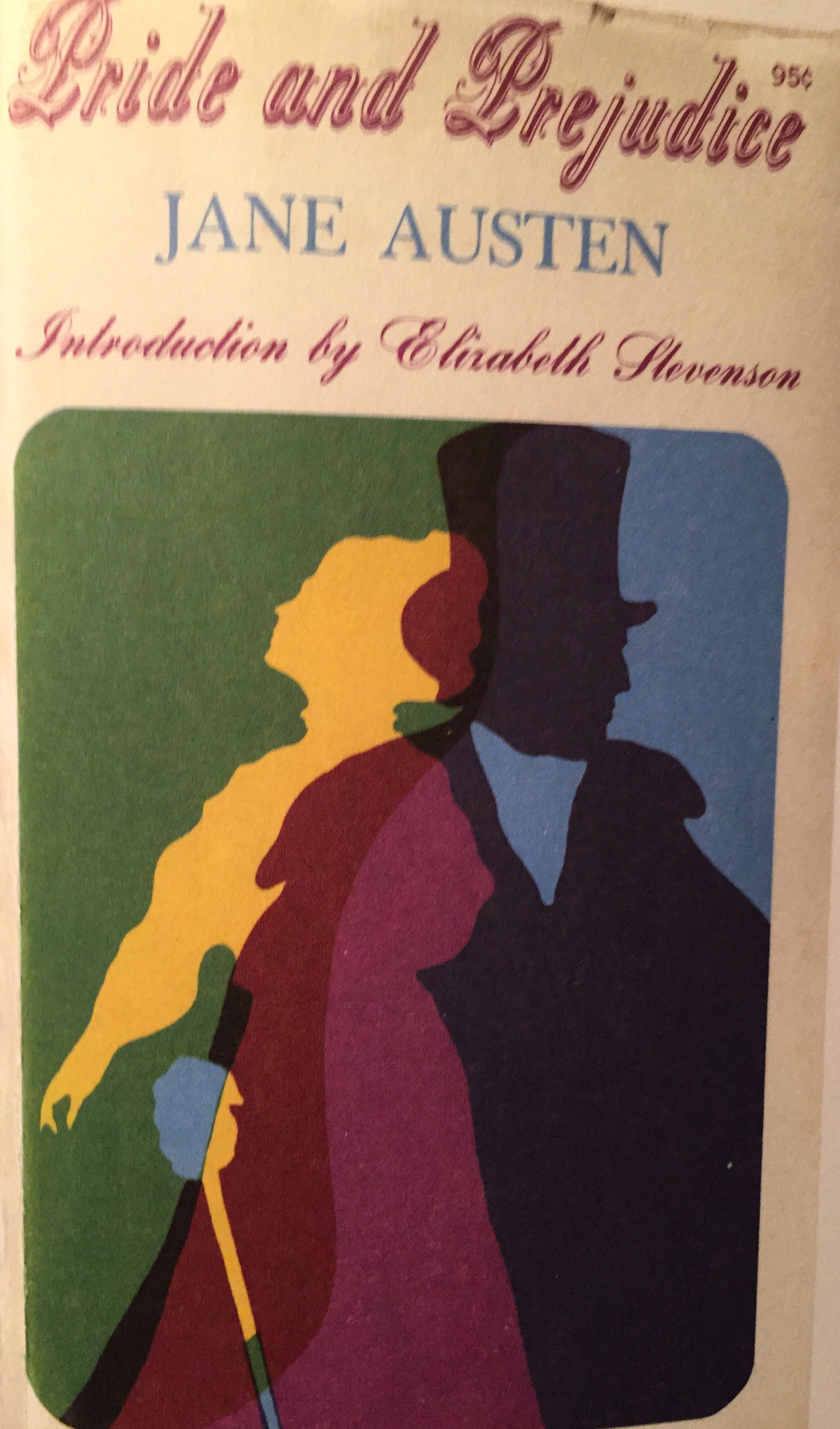
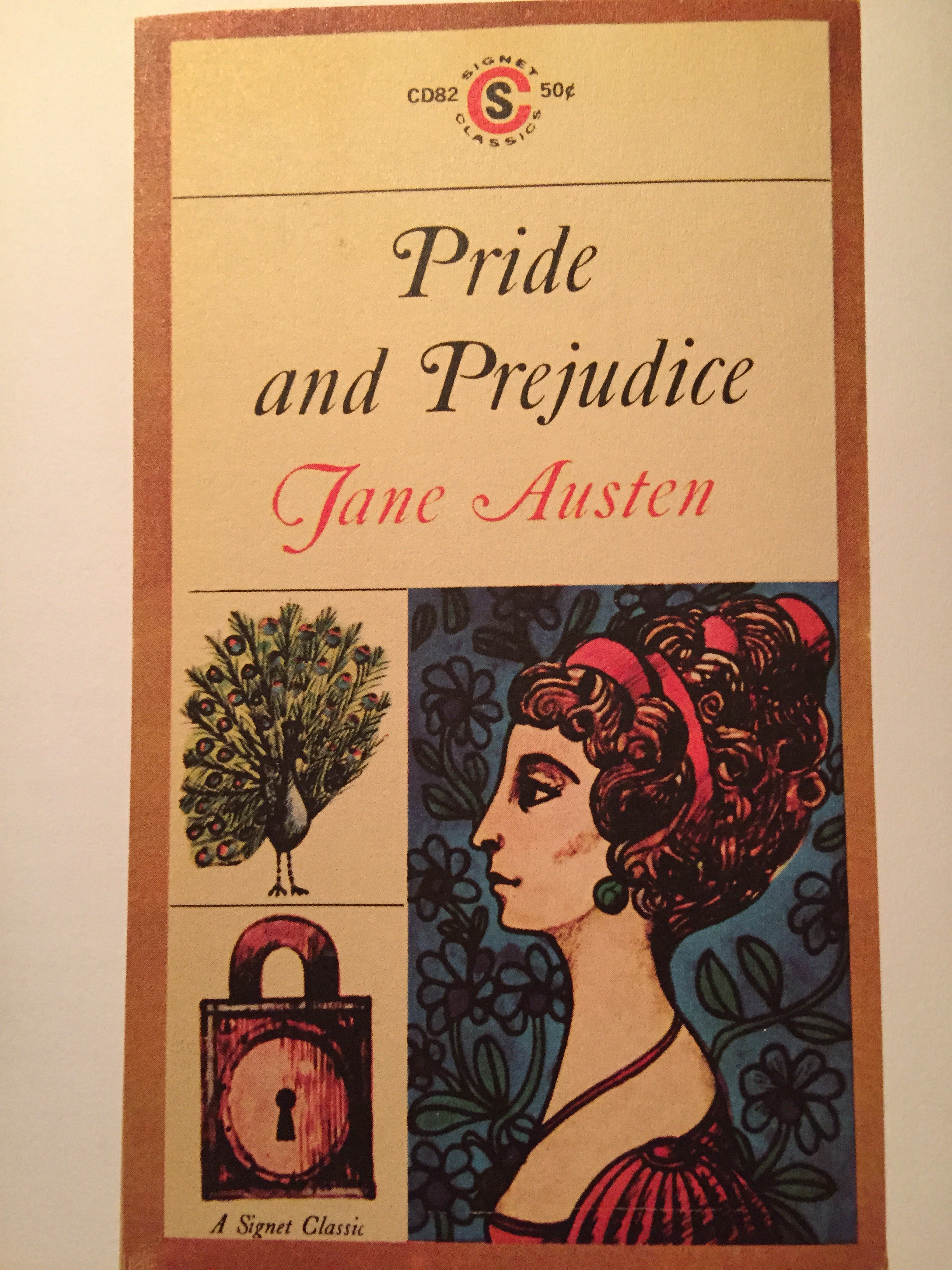
image_3

———————————————————————–
image_1
image

Playing music benefits your brain

Neuroscientists have discovered a wonderful new correlation between playing music and activities in the brain. Turns out that when you play music, multiple areas of the brain light up simultaneously processing different areas of the brain in intricate, interrelated, astonishingly fast sequences.

“While listening to music engages the brain in some pretty interesting activities, playing music is the equivalent to a full body workout.”

The theory is that playing a musical instrument engages practically every area of the brain at once. Especially the visual, auditory and motor cortices. When you combine that with disciplined, structured practice, the idea is that this strengthens brain functions, allowing us to apply that strength to other activities.

So unlike the action of simply listening to music, playing music allows us to use fine motor skills which which are controlled in both hemispheres of the brain. It also combines the linguistic and mathematical precision in which the left hemisphere is more involved with the novel and creative content that the right hemisphere excels in.

For this reasons playing music has been found to increase the volume and activity in the brain’s corpus callosum, the bridge between the two hemispheres, allowing messages to get across the brain faster and through more diverse routes. This may allow musicians to solve problems more effectively and creatively, in both academic and social settings.

Musicians often have higher levels of executive functions

Because music also involves crafting and understanding its emotional content and message, musicians often have higher levels of executive functions, a category of interlinked tasks that includes planning, strategizing and attention to detail, and requires simultaneous analysis of both cognitive and emotional aspects. This ability also has an impact on how our memory systems work.

Musicians exhibit enhanced memory functions: creating, storing and retrieving memory more quickly and efficiently.

Studies have found that musicians appear to use their highly connective brains to give each memory multiple tags, such as a conceptual tag, an emotional tag, an audio tag, and a contextual tag….like a good internet search engine.

So how do we know that all these benefits are unique to music?

Neuroscientists have found that the artistic and aesthetic aspects of learning to play a musical instrument are different from any other activities, including other arts.

Insights from this blog were gleaned from Anita Collins.

How playing an instrument benefits your brain – Anita Collins


How To Make Your Brand A Sticky Brand

Sticky Branding is an action-oriented branding playbook, complete with exercises at the end of each chapter.

“Sticky brands don’t behave like faceless companies. They stand out because they reveal their personality, share their opinions, and build real customer relationships.”

Jeremy Miller identifies principles that can make any company stand out. These include concepts like Simple Clarity – one of the foundations of a sticky brand. It’s simple: Jeremy Miller says that when people understand you, they are more likely to buy from you.

The 5 Words You Want To Hear A Customer Say

“That’s interesting. Tell me more.”

There are lots of wonderful insights in the book that even small business can apply if they are keen to turn their brand into a sticky brand. The advantage of Sticky Brands is that they can cut through the clutter of their market and engage their customers with Brand storylines – stories that engage them in a conversation and build relationships.

The value of a Sticky Brand is sales. Sticky Brands, according to Jeremy Miller, sell more, faster – provided they are purposeful with their resources. And, isn’t this what we are all after? He recognizes that small- and mid-sized companies don’t have vast marketing budgets and resources to move the sales needle. To drive sales and grow a sticky brand, he recommends you focus on one priority at a time: Volume, Velocity, or Value.

Jeremy Miller’s Sticky Branding is a book that one will have to pick up over and over again to be constantly reminded of the importance of a brand. There is so much here. It’s a textbook written for real life results.

“There will always, one can assume, be the need for some selling. But the aim of marketing is to make selling superfluous. The aim of marketing is to know and understand the customer so well that the product or service fits him and sells itself.”
~ Peter Drucker, management guru

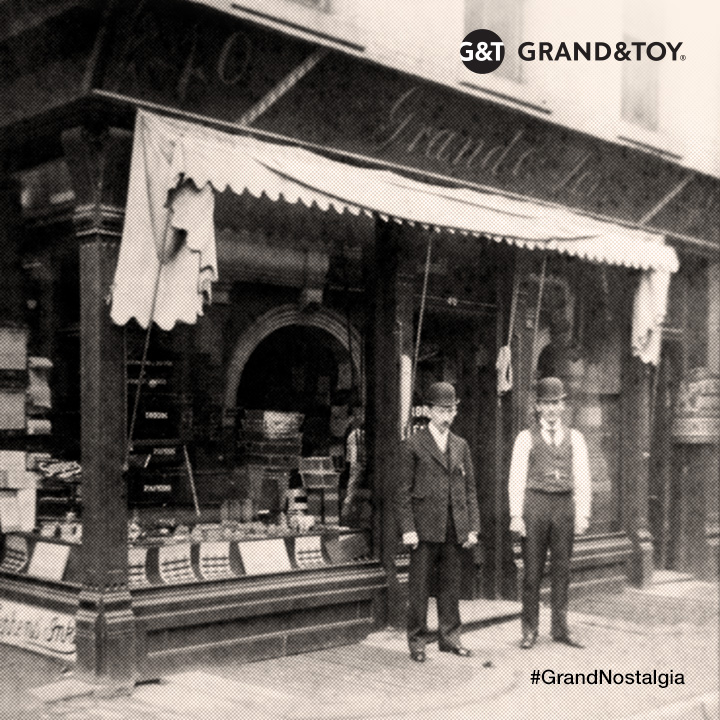
132 years later Grand & Toy still has clout

FB_Did_You_Know_Image_01

Founders James Grand and Samuel Toy, at the first retail location (corner of Leader Lane and Colborne Street), now the
Tom Jones Steakhouse.

Today Grand & Toy went back to their Canadian roots, bringing back their iconic “green” logo and a new fun nostalgic hashtag #GrandNostalgia. Even though the brand has been notably absent from the Canadian consumer retail scene in recent years, Grand & Toy has continued to serve customers in the background at the B2B level with the same commitment that its founders James Grand and Samuel Toy had done since the company’s inception in 1882.

Their new manifesto is outlined here:

The Grand & Toy brand is a success story. Canadians continue to remember the “green” logo with fond memories. And, why wouldn’t they? Over the years Grand & Toy stayed true to its consumer-centric philosophy and even had signs in its offices reminding the employees of what was most important.

“CUSTOMERS ARE NOT AN INTERRUPTION OF OUR WORK – THEY ARE THE REASON FOR IT. CUSTOMERS COME FIRST.”

Grand-&-Toy-Facebook-ProfileThere are stories that Grand & Toy delivered an office desk via a motorcycle in its early years. It’s a far cry from a bygone age when young lads used to make deliveries via wheelbarrows. It is this dedication of always putting the customer first that has Canadians always thinking fondly of the iconic office supplies provider.

The true success of a brand is when people recognize it even after it has long stopped being in the face of consumers. Grand & Toy is one of those brands (like Tim Hortons) that continues to resonate with Canadians and is part of the national identity. For the next two weeks, Grand & Toy will making a huge social splash and launch a campaign on both Facebook and Twitter highlighting its nostalgic roots using #GrandNostalgia.

It will be nice to follow the brand over the next few months and see what kind of impact it makes on the Canadian workplace solutions space. Our bets are that Grand & Toy will #ThinkBlink and successfully challenge rival brand Staples in the e-commerce and B2B market.

Red verses Green. Let the games begin!

NaNoWriMo Day 28 – Play Word Games

There’s a lot to be said about play. It relaxes the brain and personally I’ve found that the less stressed I am, the more creative ideas I have. When I take my laptop or notebook to work outside in the garden, I come up with the most incredible stories and my writing resonates the calm that I feel.

I’ve said before, do a crossword or a sudoku every morning. But how about looking up different word games to play whenever you need a bit of a break from your writing. There’s so many to choose from. Do a Google search and you’ll see.